
Features
Safety: Beyond the Worksite
Managing silica dust requires a more human-centred approach across workers, workplaces and communities
August 4, 2026
By Dr. Nayab Sultan
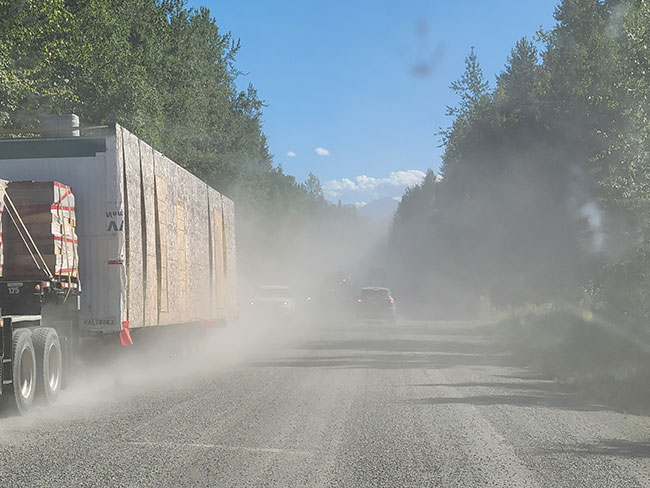 Addressing the health risks of silica dust requires connecting workplace safety, environmental responsibility and long-term worker health. PHOTO: Dr. Nayab Sultan
 Talking Points
Despite advancements in monitoring and regulations, silica dust continues to pose significant long-term health risks for workers in construction and roadbuilding. Many employees are still developing serious respiratory diseases, such as silicosis, years after initial exposure. A recent article highlights the need for a comprehensive approach that goes beyond measuring dust levels to include workplace safety, environmental responsibility, and long-term health considerations.
- Silica exposure remains a critical issue, with workers facing cumulative risks over time.
- New tools are emerging to help identify and manage silica exposure more effectively.
- Worker participation is essential in recognizing and addressing exposure risks on job sites.
This story underscores the importance of prioritizing long-term health outcomes in workplace safety discussions, as effective prevention strategies can protect workers from the delayed effects of silica exposure.


Silica dust remains one of the most serious long-term health risks in construction, aggregates and roadbuilding. While the industry has improved monitoring, regulation and awareness, workers are still developing preventable respiratory disease, often years after exposure first began. Addressing the problem will require more than measuring dust levels. It will require connecting workplace safety, environmental responsibility and long-term worker health.
Silica Is Still Causing Harm
Over the past decade, the construction and roadbuilding sectors have made real progress in identifying and managing silica exposure. Monitoring technology has improved, regulations have become stronger and awareness has grown across the industry. Many employers are investing in dust suppression, exposure monitoring and worker protection. This progress matters.
But despite those improvements, silica-related disease has not disappeared.
Workers are still developing silicosis and other serious respiratory illnesses linked to long-term dust exposure. In many cases, those illnesses emerge years, even decades, after the initial exposure.
That reality raises an important question: If we are getting better at measuring silica exposure, why are workers still getting sick?
Building on Industry Progress
A recent Rock to Road feature by Meghan Friesen, ROH, highlighted a new free online risk assessment tool designed to help surface mining operations better identify and manage exposure to respirable crystalline silica.
Tools like these are an important step forward, helping employers move beyond assumptions and make more informed decisions about where on-site exposure risks may exist. Better visibility into exposure can support better planning, better controls and ultimately safer work environments. But tools alone cannot solve the entire problem.
The challenge with silica is not simply identifying dust; it is understanding how exposure builds over time and how difficult it can be to recognize the long-term consequences before damage has already occurred.
Exposure Doesn’t End at One Job Site
One of the biggest challenges with silica is that exposure rarely happens in isolation. A worker may spend years moving between projects, employers and job sites. Exposure builds over time, cutting concrete one year, grinding asphalt the next, working around crushing operations or dry-sweeping dust in enclosed spaces years later. No single task may seem extreme on its own, but together, the cumulative effect can be significant on the individual.
At the same time, on-site dust does not always remain confined to a single work area. Silica dust can spread into surrounding environments, nearby work zones and adjacent communities, particularly during dry conditions or in poorly controlled operations.
That is why silica should not be viewed only as a workplace issue. It also intersects with environmental and public health concerns.
The Problem with Delayed Harm
Unlike many workplace injuries, silica-related disease does not usually appear immediately. A worker exposed today may not develop symptoms for 10, 20 or even 30 years. That delay creates a major challenge for the industry. A company may have excellent short-term safety statistics, strong compliance records, and low incident rates, while workers are still accumulating long-term respiratory risk that will not become visible until much later. In other words, traditional safety metrics do not always tell the full story.
The industry has become very good at tracking incidents in real time. Long-latency disease is much harder to see.
Measuring Dust Is Not the Same as Preventing Disease
Modern monitoring equipment and digital tools are helping companies better understand where exposure may occur. That is a positive development, but it’s important to remember it is one step of many toward preventing harm.
- A monitor can identify dust levels.
- A model can estimate exposure.
- A dashboard can display trends.
None of those things automatically reduces risk. Real prevention still depends on:
- Controlling dust generation.
- Improving work practices.
- Maintaining ventilation and suppression systems.
- Training workers properly.
- Creating a culture where health risks are taken seriously, even when they are not immediately visible.
- Putting into place health surveillance measures to protect workers’ health
- Building a culture which respects workers’ rights.
There is a danger in believing that because something is being measured, it is therefore fully controlled. It often is not.
What Happens on Site Matters Most
Silica exposure is shaped by what happens on the ground every day. Workers operate under production schedules, changing weather conditions, tight timelines, equipment limitations and evolving site demands. Under those conditions, dust can easily become normalized as “part of the job.”
This is not about blaming workers. It is about recognizing operational reality.
In many workplaces, people may understand that dust is hazardous in general terms, but the long-term health consequences still feel distant and abstract compared to the immediate pressures of completing the work.
That is where strong leadership, supervision and workplace culture become critical.
Listening to Workers More Closely
One area that deserves greater attention is worker participation in identifying exposure risks.
In many cases, workers can identify problems long before they appear in formal reports or monitoring data.
They generally know:
- Where dust builds up,
- Which tasks create the heaviest exposure.
- When controls are not working properly.
- How conditions change throughout the day.
Approaches such as worker-led exposure discussions and body mapping exercises have helped clarify how exposure occurs in practice. These methods do not replace technical monitoring. They complement it by connecting data with real-world experience. That human perspective is often missing from silica management discussions.
Compliance Alone Is Not Enough
Regulations and exposure limits are essential. They establish minimum expectations and create accountability across the industry. But legislation only sets minimum expectations with compliance viewed as the starting point, not the finish line.
A company can technically meet regulatory requirements while workers still face long-term cumulative exposure risks over the course of their careers. Preventing disease requires thinking beyond individual projects and short-term timelines.
It means considering:
- Cumulative exposure over decades.
- Changing work environments.
- Multiple employers.
- Subcontracted work.
- Broader environmental impacts.
That requires a more integrated approach among occupational health, environmental monitoring and public health systems.
A Different Conversation About Silica
The construction and roadbuilding industries have already made important progress on silica awareness and control. That progress should be recognized and applauded, but the next step is shifting the conversation from measuring exposure to preventing long-term harm.
That means:
- Improving co-ordination across systems.
- Strengthening workplace culture.
- Listening more closely to workers.
- Treating long-term respiratory health as a core safety outcome, not a secondary issue.
The tools exist. The knowledge exists. The warning signs are clear. The challenge now is ensuring the systems responsible for protecting workers are aligned closely enough to prevent harm before it appears years later. Because ultimately, silica is not just about dust. It is about people.
Dr. Nayab Sultan is a globally recognized advisor working at the intersection of occupational, environmental and public health systems. He specializes in silica exposure, silicosis prevention and long-latency occupational disease. He is the current recipient of the Society of Occupational Medicine’s Outstanding Achievement Award for Contribution to Occupational Health Globally. To learn more, see his websites www.global-hse.com or www.nayabsultan.com, or find him on LinkedIn: www.linkedin.com/in/nayabsultan